About SparseMind
We research sparse neural networks and develop efficient AI models and systems.
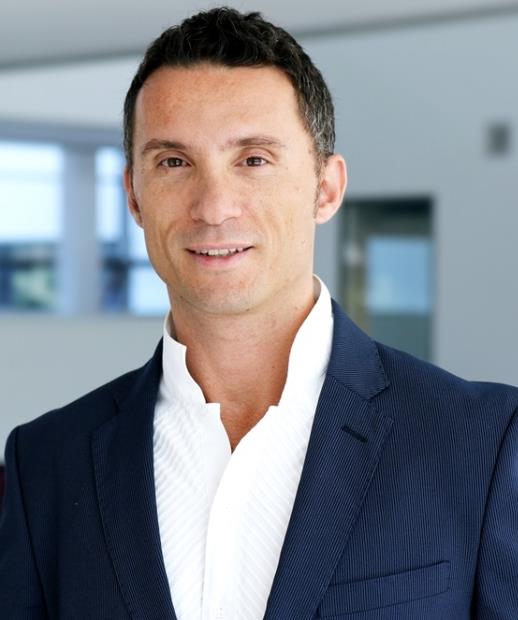
If Physics studies the principles and mechanisms of the outside universe.
Brain science studies the principles and mechanisms of the inside universe.
My research is at the interface between these two disciplines.
I deal with “Physics and Engineering of Complexity and Intelligence”
物理学研究外部宇宙的原理与机制。
脑科学研究内部宇宙的原理与机制。
我的研究位于这两门学科的交汇之处。
我致力于“复杂性与智能的物理学与工程学”。
From scientific inquiry to real-world applications.
Exploring intelligence through biology and computation.
Carlo earned his master’s degree at Politecnico di Milano in 2005 and his PhD in 2010. Research in Italy and a visiting period at UC San Diego helped shape his interdisciplinary approach.
Discovering the power of network structure.
Research in Scientific Reports introduced the local-community paradigm through link prediction in brain connectomes and protein networks, bringing the organization of connections into focus.
Building knowledge across disciplines.
At TU Dresden, Carlo led research connecting complex networks, computational methods and biological systems. His long scientific journey informs a guiding question: can artificial neural networks learn efficiently through dynamic, sparse connections, like the brain?
Connectivity enters the learning process.
An ICLR 2024 paper introduced Cannistraci–Hebb Training, using topology-guided regrowth to investigate learning in ultra-sparse deep networks.
From vision to language intelligence.
NeurIPS 2025 research advanced CHT soft rules and density evolution, extending experiments to machine translation and the LLaMA model family.
Connecting science with practical computing.
Research expanded into N:M semi-structured training, sparse retraining and spiking neural networks, bringing original methods closer to practical computing constraints.
Turning original science into real-world capabilities.
SparseMind advances this research journey through open models, model adaptation and joint hardware validation. CHT-Computing, CHT-Edge and CHT-Hardware serve a shared ambition: efficient, sustainable next-generation AI.
Original science.
Next-generation AI.
Advance efficient next-generation AI through Cannistraci–Hebb Training, our original dynamic sparse learning paradigm, and co-design across models, software and hardware.
Make structural efficiency a foundation of AI computing, bringing advanced intelligence to more platforms and real-world applications.
Long-term optimism. Scientific rigor. Decisive action.
Less, but better. Simple, yet profound. Let the spirit of sparsity shape our products, our team and our actions.